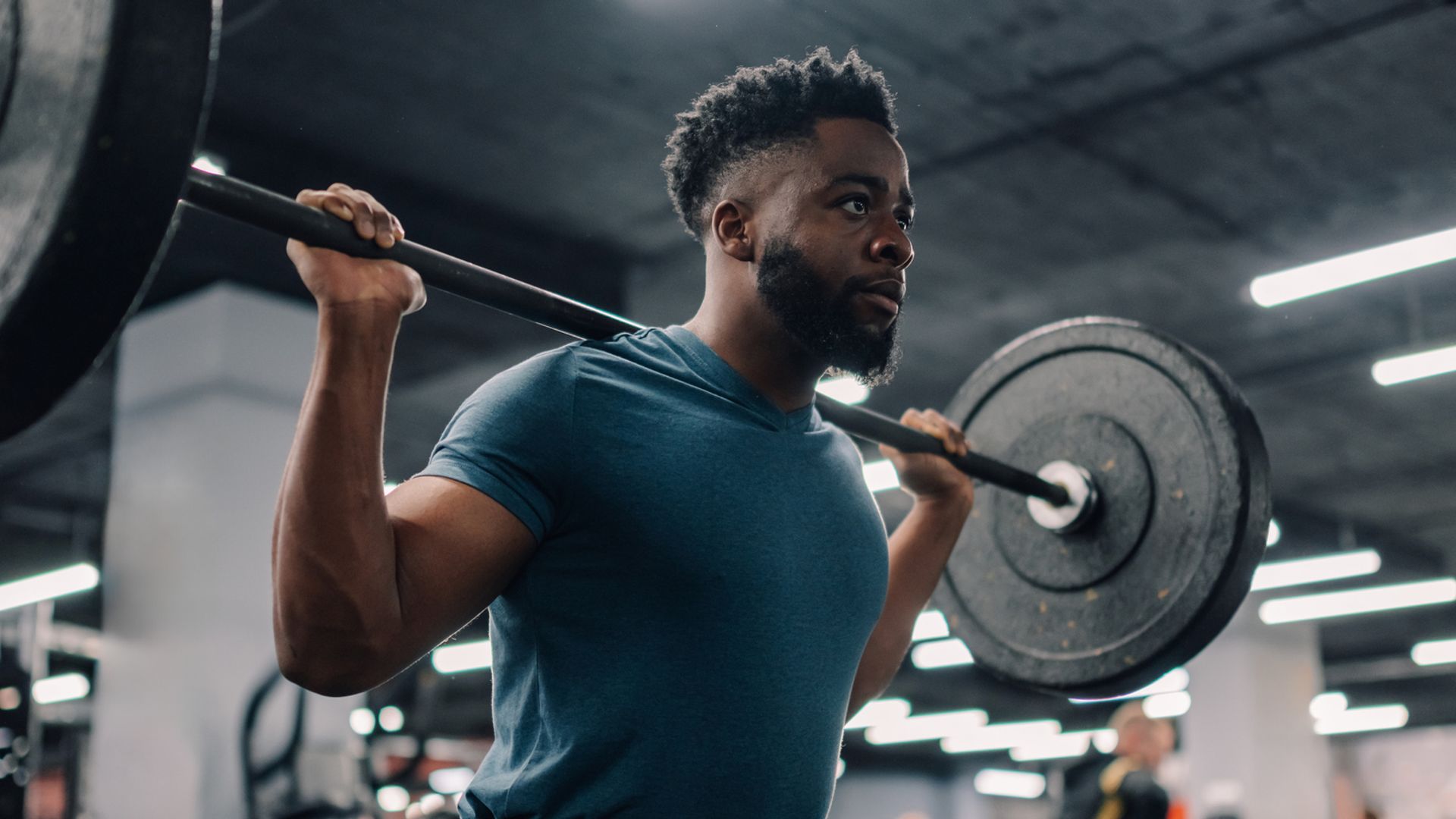
Go to any public park on a Saturday morning. You will see crowds of people jogging. Some look miserable. Others look like they are cruising. Now go to the local gym. The weights section is usually packed with a very specific crowd, while average fitness seekers stick to the treadmills.
We have been conditioned to think health is all about getting your heart rate up through cardio. It's a mistake. Running is great for your lungs, sure. But cardio alone leaves a massive health gap that most people completely ignore until it's too late.
The reality is simple. You need to lift weights. Or push your own body weight. You need muscle.
The UK Chief Medical Officers actually updated their physical activity guidelines to emphasize this, pointing out that adults should do strength exercises at least two days a week. Yet, public health data shows that barely a fraction of the population hits this target. Most people just walk or cycle and think they are covered. They aren't. Skipping resistance training accelerates aging, wrecks your metabolic health, and sets you up for injury.
The Quiet Crisis of Muscle Loss
Your body starts changing around age 30. If you aren't actively fighting it, you lose muscle mass every single decade. Medical experts call this sarcopenia. It sounds terrifying because it is.
When you lose muscle, you don't just get softer. You lose your body's main sink for glucose. Muscles eat sugar for fuel. When your muscle mass shrinks, your risk for type 2 diabetes skyrockets because your body has fewer places to store glycogen. This isn't just about looking fit. It's about systemic metabolic defense.
A lot of people think lifting weights is only for bodybuilders or young athletes. That's backward. The older you get, the more critical iron becomes. It's the difference between playing with your grandkids or struggling to get out of a low chair.
Consider bone density. Bones respond to stress. When you lift heavy things, your muscles pull on your bones. This mechanical stress signals your body to deposit more minerals into the bone matrix. Jogging offers some impact, but it doesn't provide the multi-directional, heavy loading that builds a truly resilient skeleton. For women especially, who face a steep drop in bone density post-menopause, skipping the weight room is a massive gamble.
Moving Past the Dreaded Gym Bro Myth
I hear the same excuses constantly. "I don't want to get bulky." "The weights section is intimidating." "I'll hurt my back."
Let's address the bulk myth first. Building massive, bodybuilder-style muscle requires an insane amount of calories, precise hormone profiles, and years of dedicated, hyper-specific training. You will not accidentally wake up looking like an action figure because you picked up a pair of twenty-pound dumbbells. What you will do is build lean, dense tissue that burns calories even when you're sitting on the couch.
As for the intimidation factor? It's real. The free weights section can feel like a chaotic subculture. But you don't need to start with a 300-pound barbell squat.
Resistance is just resistance. Your muscles can't tell the difference between a high-tech machine, a rusty dumbbell, a resistance band, or your own body weight fighting gravity.
How Much Lifting Do You Actually Need
You don't need to live in the gym. The data shows that the steepest health benefits happen when you go from doing zero strength training to doing just one or two sessions a week.
A massive British Journal of Sports Medicine study analyzed data from hundreds of thousands of participants. The researchers found that just 30 to 60 minutes of strength training per week was associated with a 10% to 20% reduction in the risk of all-cause mortality, cardiovascular disease, and cancer. Think about that. Less than an hour a week can literally extend your lifespan.
Going beyond 130 minutes a week actually showed diminishing returns for general health longevity. You get the maximum ROI early.
Here is what a highly effective, low-barrier routine looks like for a beginner. You focus on compound movements. These are exercises that recruit multiple joints and large muscle groups at the same time.
- Squats or Lunges: Targets the thighs and glutes. You can start by just squatting down to a chair and standing back up.
- Push-ups or Chest Press: Works the chest, shoulders, and arms. Incline push-ups against a wall or kitchen counter are perfect if the floor is too hard.
- Rows or Pull-downs: Crucial for posture and upper back strength. This counters the desk-slouch we all suffer from.
- Planks or Carries: Builds core stability to protect your lower back.
Do eight to twelve repetitions of each. Rest a minute. Repeat twice. Do that twice a week. You're done.
The Brain and Mental Health Connection
We talk a lot about the physical changes, but the mental shifts are arguably faster and more profound. Lifting weights triggers a cascade of neurochemicals.
When you push against a heavy load, your brain releases brain-derived neurotrophic factor (BDNF). This protein acts like fertilizer for your brain cells, supporting neuroplasticity and memory. Clinical trials have repeatedly shown that resistance exercise significantly reduces symptoms of anxiety and depression, sometimes performing just as well as traditional talking therapies or medication for mild to moderate cases.
There's also a psychological shift that happens when you realize your body can do hard things. Cardio teaches you to endure discomfort. Strength training teaches you to overcome it. Tracking your progress and seeing that you can lift something this week that crushed you last month builds a distinct kind of practical confidence.
Avoid the Common Trap of Chasing Sweat
A big mistake beginners make is judging the quality of a strength workout by how much they sweated or how exhausted they feel. This isn't a spin class.
Strength training is about tension, not fatigue. If you finish a set of squats and your heart is beating fast but your muscles don't feel tired, you probably didn't use enough weight. You need to challenge the tissue. The last two repetitions of any set should feel genuinely difficult. If you can breeze through fifteen reps while reading a text message, you are wasting your time.
Progressive overload is the rule. If you lift the exact same weights for the exact same reps for the next six months, your body won't adapt anymore. You have to give it a reason to keep the muscle. Add a pound. Add a rep. Slow down the movement. Just don't stay comfortable.
Your Immediate Next Steps
Stop planning and start doing. Tomorrow, don't just go for your usual walk. Find a sturdy bench or chair.
Perform ten bodyweight squats, making sure your hips sink back like you're sitting down. Then do ten push-ups against a wall or a kitchen counter. Rest for one minute. Repeat that cycle three times.
You just completed your first resistance training session. Do it again in three days. Buy a set of adjustable dumbbells next week. Your future self will thank you for the muscle.