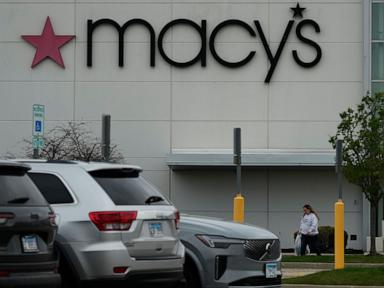
Department stores are supposed to be dead. For the last decade, retail pundits wrote endless obituaries for the traditional mall anchor, blaming e-commerce, shifting consumer habits, and a general lack of innovation.
Yet, Macy's just pulled off its fourth consecutive quarter of comparable sales gains.
The company outpaced Wall Street expectations for the first quarter of 2026, reporting net income of $63 million, or 23 cents per share. Adjusted earnings per share landed at 13 cents, beating analyst predictions by a dime. Net sales ticked up to $4.68 billion from $4.6 billion a year ago. It is not an anomaly anymore. It is a trend.
If you are trying to understand where consumer money is moving right now, this earnings report offers a clear roadmap. Retailers are dealing with massive macroeconomic headaches, from gas prices hovering above $4 a gallon to ongoing international tensions. Despite these headwinds, Macy's raised its full-year guidance.
The retailer now expects annual net sales between $21.5 billion and $21.75 billion.
The Three Tier Strategy Saving the Nameplates
Most analysts look at Macy’s as a single entity, but the secret to their current success lies in how differently they treat their three distinct brands. CEO Tony Spring, now in his third year driving this turnaround strategy, is playing a multi-tiered game that targets specific income brackets.
Bloomingdale's is Capitalizing on Competitor Chaos
Bloomingdale’s had a massive quarter, posting a 10.2% increase in comparable sales. It is the highest first-quarter sales volume on record for the upscale banner.
While part of this performance comes down to excellent merchandising, we have to look at the broader luxury ecosystem. The recent Chapter 11 bankruptcy filings and structural turmoil surrounding Saks Global—the entity managing Saks Fifth Avenue and Neiman Marcus—left a vacuum. Wealthy shoppers wanted stability and a reliable luxury experience. Bloomingdale's stepped right in and grabbed that market share.
High-income consumers still spend freely. Their portfolios are healthy, the stock market remains steady, and they want exclusive luxury items. Spring noted that fragrances, dresses, and men's shoes did incredibly well during the quarter.
Bluemercury Rides the Beauty Wave
The beauty sector remains incredibly resilient against inflation. Bluemercury, Macy’s standalone cosmetics and skincare chain, delivered a 6.4% comparable sales gain.
Shoppers might hold off on buying a new couch, but they will still spend $40 on a premium lipstick or serum. This micro-indulgence behavior helps protect the parent company when big-ticket home furnishings slump.
The Core Macy's Brand Trims the Fat
The namesake Macy’s stores saw a modest 1.6% comparable sales bump. That number looks small next to Bloomingdale’s, but given where the brand was three years ago, it is a major win.
The strategy here is simple: close the bleeding stores and fix the ones that work. Under the Reimagine 200 initiative, the company focused heavy investment on its top-performing locations. They upgraded customer service, modernized layouts, and cleared out stale inventory. The Reimagine 200 stores specifically saw a 2.4% comparable sales lift, proving that physical retail works when you actually maintain the property.
How the Split Consumer Changes the Merchandising Playbook
We are living through a heavily fragmented economy, and it shows up clearly in the retail data.
- High-income shoppers are unbothered by inflation, driving luxury growth at Bloomingdale's.
- Middle-income shoppers are highly selective, buying only when they see clear value or need an outfit for a specific event like a wedding or prom.
- Lower-income shoppers are facing severe financial strain, hunting exclusively for heavily discounted clearance items in designated Macy's zones.
Tony Spring pointed out that furniture and big-ticket items are hurting right now. Shoppers are delaying home upgrades because credit is expensive and housing moves have slowed down. But they are still willing to spend on fashion, newness, and personal indulgences.
Macy’s successfully shifted its inventory away from slow-moving home goods and into high-turnover fashion categories before the quarter began. Merchandise inventories only increased 3.6% year-over-year, meaning the company isn't sitting on a mountain of unsold goods that they will have to aggressively discount later this summer.
The Financial Reality Behind the Raised Guidance
Let’s look at the actual numbers driving the revised full-year outlook. Macy’s changed its projections across every key metric, signaling strong internal confidence for the rest of 2026.
- Annual Net Sales: Raised to $21.5 billion – $21.75 billion (Up from $21.4 billion – $21.65 billion)
- Comparable Sales: Expected to rise 0.5% to 1.2% (Up from previous estimates of a 0.5% decline to 0.5% gain)
- Adjusted Diluted EPS: Targeted at $2.00 to $2.20 (Up from $1.90 to $2.10)
This isn't just about selling more dresses. The company is running a much tighter operational ship. Selling, general, and administrative (SG&A) expenses held steady at 39.9% of total revenue.
They also saw a nice 11.7% bump in credit card net revenues, bringing in $172 million due to a surprisingly healthy credit portfolio. When consumers use store cards responsibly, it provides a high-margin revenue stream that buffers against retail margin pressures.
What Retailers Need to Do Next
If you run a retail business or manage an e-commerce brand, you can't just copy Macy’s scale, but you can copy their current playbook.
First, stop treating your customer base as a homogenous group. Segment your inventory to offer clear entry points for value-conscious buyers while maintaining a premium tier for shoppers who aren't feeling the squeeze.
Second, ruthlessly cut underperforming channels. Macy’s stopped trying to fix every single mall location. They poured capital into the top 200 stores that already had steady foot traffic. Do the same with your product catalog or marketing channels: double down on what works and kill the rest.
Finally, watch your inventory levels like a hawk. The quickest way to destroy your margins in this economy is getting stuck with heavy, slow-moving items that require massive clearance discounts just to clear shelf space. Focus on agility, fresh merchandise, and immediate consumer desires.